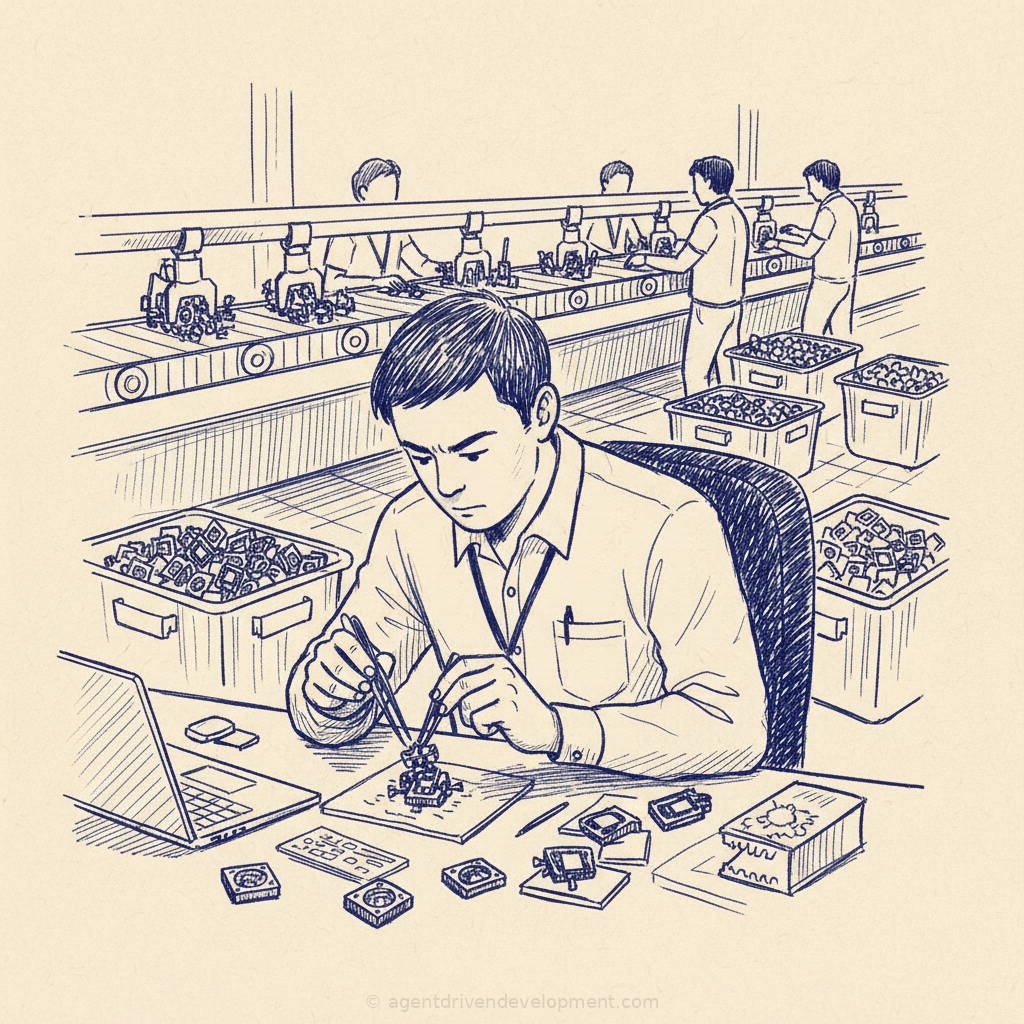
Picture this. You wake up to three fully functioning proof of concepts, each with a complete go-to-market plan, built and validated by agents overnight. A hundred started. Three survived. This is not 2030. You could have done this last month.
Capability is the only durable AI moat. Tooling is rented; capability compounds.
Treat the AI invoice as capital, not expense.
Building a competitive advantage requires internalizing AI capabilities, not merely consuming AI services. Sustained advantage comes from proprietary systems that integrate deeply with organizational knowledge and processes.
The cost of experimentation has dropped significantly, enabling rapid iteration cycles from concept generation to validated prototypes. This shift redefines the economics of product development and strategic exploration.
Agent-driven development accelerates the feedback loops within product creation, allowing continuous integration of market signals, customer feedback, and technical feasibility into the build process.
Value creation shifts from human-intensive ideation and documentation to human-led judgment and refinement of agent-generated artifacts. This changes the organizational demand for roles and skills.
Strategic investment in AI tooling must focus on secure, isolated environments for agent operations and robust logging to ensure traceability and maintain compliance with data governance.
The first question for any AI program: what does this organization measure, and what does the measurement reward?
Capability is the only durable AI moat. Tooling is rented; capability compounds.
Treat the AI invoice as capital, not expense.
Building a competitive advantage requires internalizing AI capabilities, not merely consuming AI services. Sustained advantage comes from proprietary systems that integrate deeply with organizational knowledge and processes.
The cost of experimentation has dropped significantly, enabling rapid iteration cycles from concept generation to validated prototypes. This shift redefines the economics of product development and strategic exploration.
Agent-driven development accelerates the feedback loops within product creation, allowing continuous integration of market signals, customer feedback, and technical feasibility into the build process.
Value creation shifts from human-intensive ideation and documentation to human-led judgment and refinement of agent-generated artifacts. This changes the organizational demand for roles and skills.
Strategic investment in AI tooling must focus on secure, isolated environments for agent operations and robust logging to ensure traceability and maintain compliance with data governance.
The first question for any AI program: what does this organization measure, and what does the measurement reward?
After 20 years in software development, Norman is both a hands-on leader and defining the new age of AI SDLC for some of the biggest brands in the world — and exploring it with the builders. He writes here about things he is hearing and seeing. All posts are his personal points of view and do not reflect any employer or any customer he has ever had contact with.
The views and opinions expressed in this article are the author’s own and do not represent the positions of any employer, client, or affiliated organization.