3 min read
December 2025 came and went without fanfare. No breathless announcements. No revolution headlines. Just model releases from Anthropic, Google and OpenAI within six weeks of each other.
The industry barely flinched. That’s how fast the baseline is moving.
What Actually Happened
Last week I handed Opus 4.5 a product problem I’d been wrestling with for days. Market positioning for a new feature. Unclear competitive landscape. Multiple technical approaches with different tradeoffs.
Most readers also read: The Engineers Who Can’t Use AI Agents Don’t Have a Tools Problem
The model acted as my product manager. It asked clarifying questions I hadn’t thought to ask myself. I told it to search Google and Bing for competitive analysis. It did. It synthesized what it found and came back with a positioning strategy that accounted for gaps in competitor offerings I hadn’t known existed.
Then it built a working prototype.
I ran the same problem through Gemini 3. Different reasoning style. Equally coherent output.
Then GPT-5.2. Same story.
Three frontier models from three different companies. All three understood what I was trying to accomplish well enough to contribute at every level: market research, strategy, implementation. Any one of these models, arriving alone, would have been a generational leap in capability.
All three arrived in a month.
The Gap That’s Opening
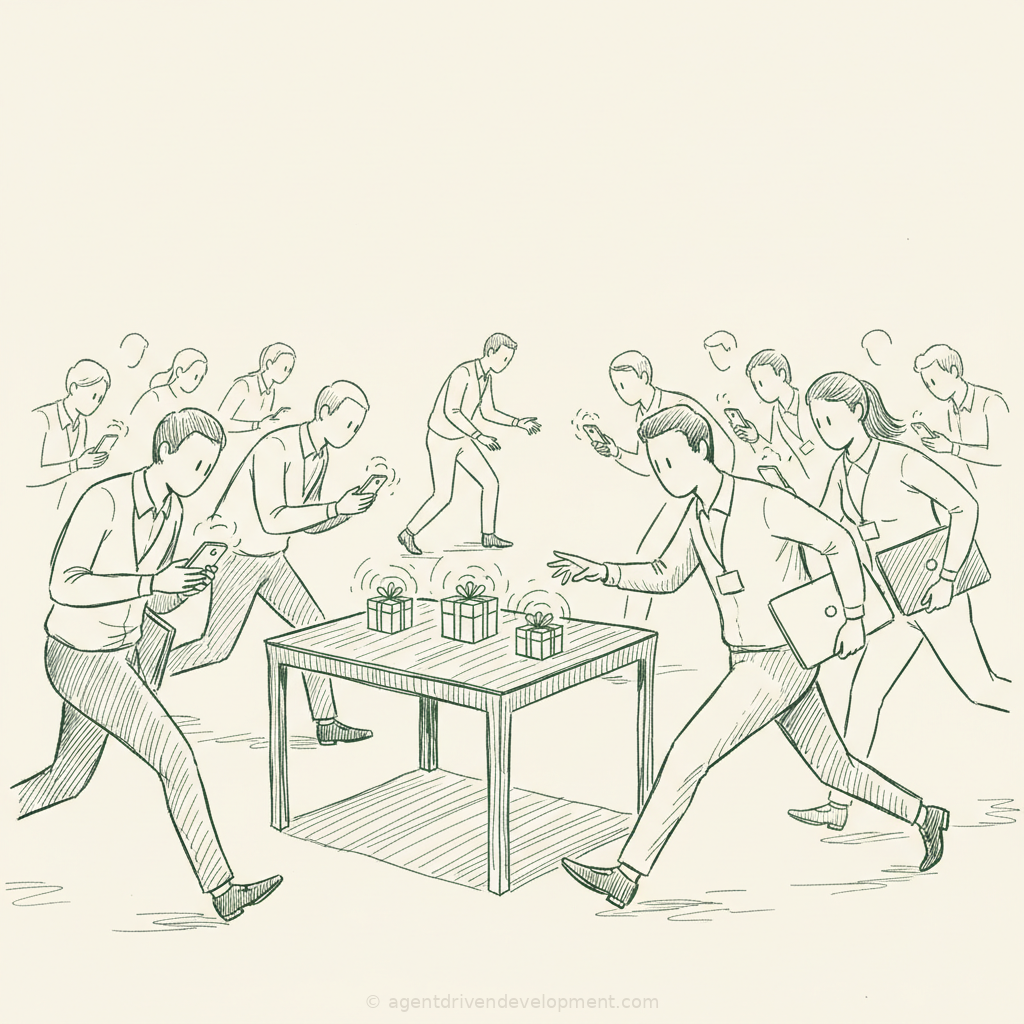
Walk into any engineering organization today and you’ll find three populations working side by side in completely different realities.
Some engineers aren’t using AI at all. They’re building software the same way they did in 2023.
Most are using AI occasionally. For boilerplate. For documentation. Leadership celebrates that “we’re using AI” without recognizing the gap between using these models for autocomplete and using them to reason through complex problems. It’s the difference between having electricity and having the internet.
A small but growing population has crossed a threshold. They’ve reorganized how they think about building software. They’re shipping in weeks what used to take quarters. They’re building alone what used to require teams.
The gap between these groups isn’t about productivity. It’s about capability—and it’s not a tools problem. And it’s widening every month.
The Pivot You’re Missing
While everyone watched model releases, something else happened in December.
Anthropic released Agent Skills as an open standard. OpenAI adopted it. The same skill format now works across Claude, Codex and ChatGPT.
This matters because skills encode institutional knowledge. Your compliance workflows. Your architecture patterns. Your way of doing things. Once encoded, that knowledge compounds. Every process you teach the model becomes available to every person in your organization, instantly.
The companies building skills libraries today aren’t just getting more efficient. They’re creating organizational capability that takes years to develop. The ones waiting will find themselves trying to close that gap in months.
If you’re still thinking about AI as “which model should we use,” you’re already asking the wrong question.
2028 Is Two Years Away
The executives hiring in 2028 will be looking for leaders who spent 2025 and 2026 and 2027 building with AI. Not evaluating. Not running pilots. Building.
This thing is evolving too fast for consultancies to package into adoption frameworks. By the time they publish the methodology, the capabilities have moved. This isn’t Agile. This isn’t DevOps. There’s no twelve-month transformation roadmap. There’s only rapid evolution.
The leaders who will thrive in 2028 are the ones putting their hands on the keyboard now. Not delegating to their teams. Not waiting for the approved vendor or the security review or someone to tell them it’s safe. They’re building, and they’re learning what these models can actually do.
December 2025 was quiet. Just three model releases. Just an open standard that lets organizations encode what they know. Just a pivot point that won’t be obvious until we’re looking back at it.
Those who know, know.
Companion


