AI-Native Engineering Operating Models
Team structures, decision systems, delivery cadences, and organizational designs built for AI-native software engineering rather than retrofitted onto a traditional SDLC.
-
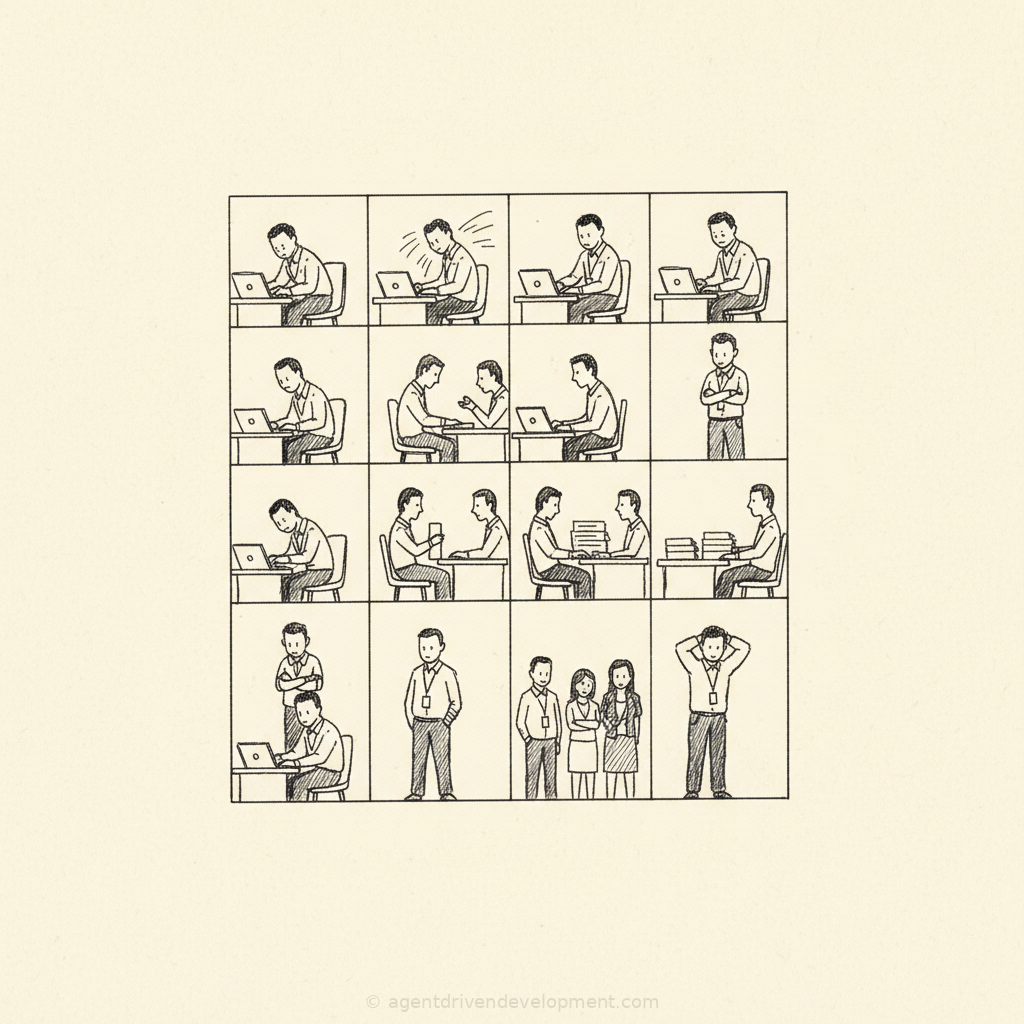
Your Engineering Team Ships in 28 Days. Ten of Those Days Are Work. The Other Eighteen Are a Leadership Problem.
Executive Deck ↗Exec summary ↗Listen ↗Your engineering team reports a 30% velocity improvement from AI tooling. Your CFO sees 5% on the P&L. The gap, millions per year, is sitting in your value stream, visible to anyone who picks up a marker. A whiteboard and a Tuesday afternoon will show you exactly where the money goes.
-
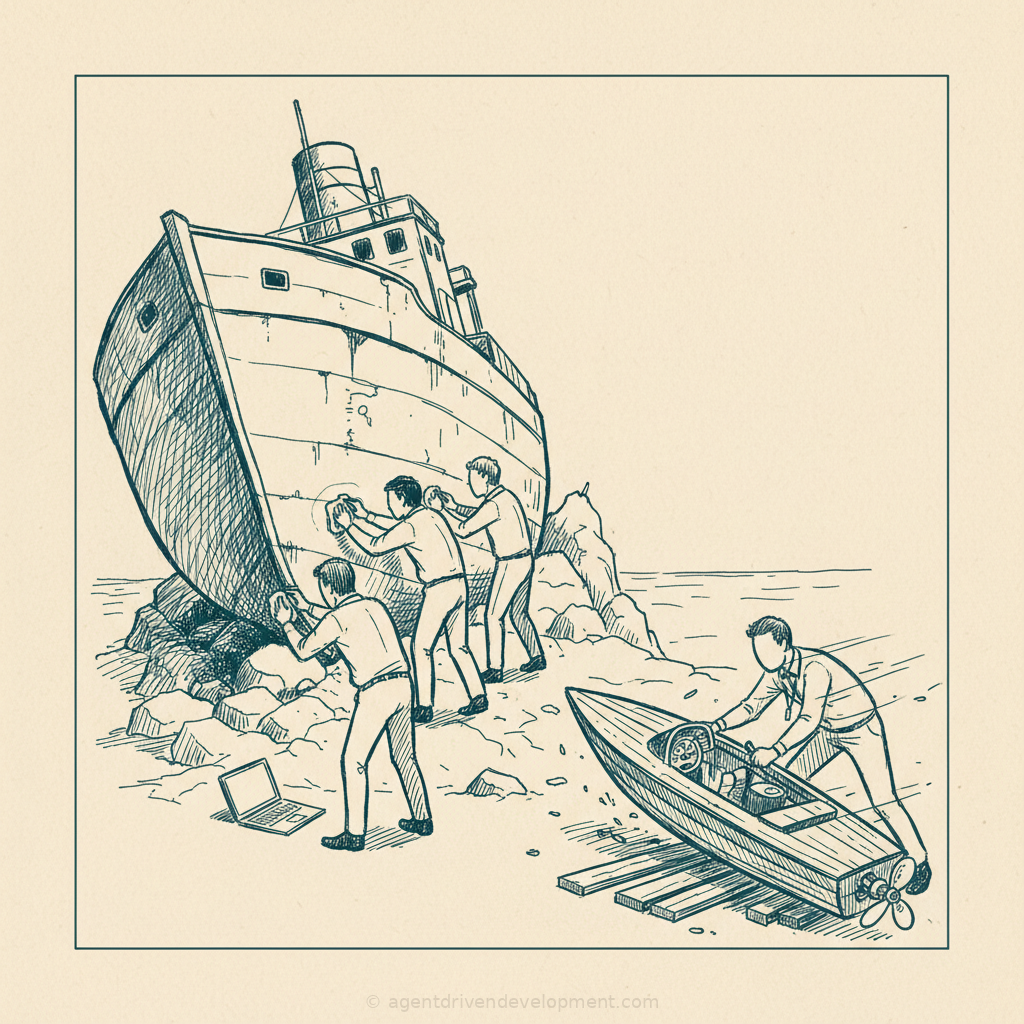
The Fifty Million Dollar Question, Stop Transforming. Start Building.
Executive Deck ↗Exec summary ↗Listen ↗Every leader I ask the fifty million dollar question gives the same answer. They would not build what they have now. They would start over from first principles with something smaller, leaner, and faster. That answer tells me whether they understand how software gets made, or whether they are just running the theater.
-
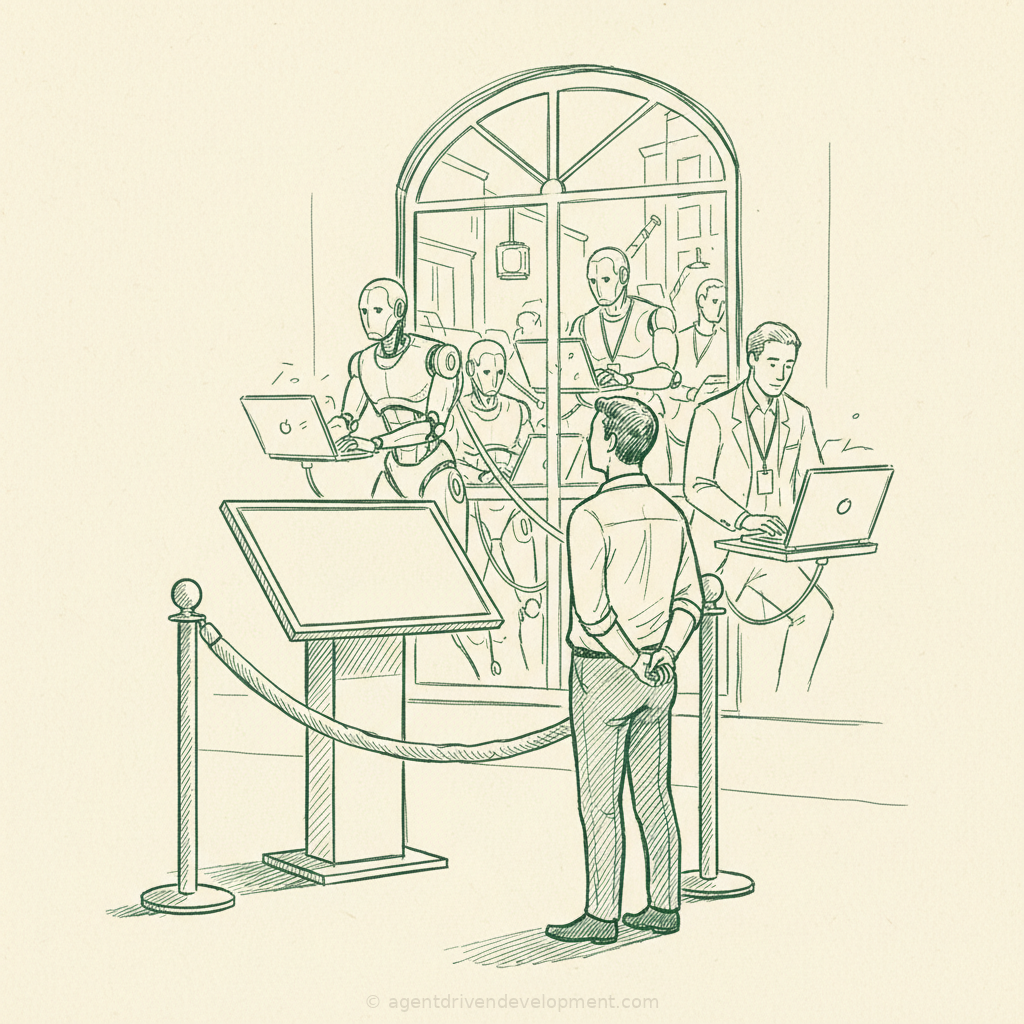
You Added AI Agents. Why Are You Still Running a Separate Quality Organization Like It Is 2009?
Executive Deck ↗Exec summary ↗Listen ↗If you are adopting AI and still defending a separate quality organization in 2026, you are not making a technical argument. You are making an emotional one. CEOs and boards should treat that as a leadership warning.
-
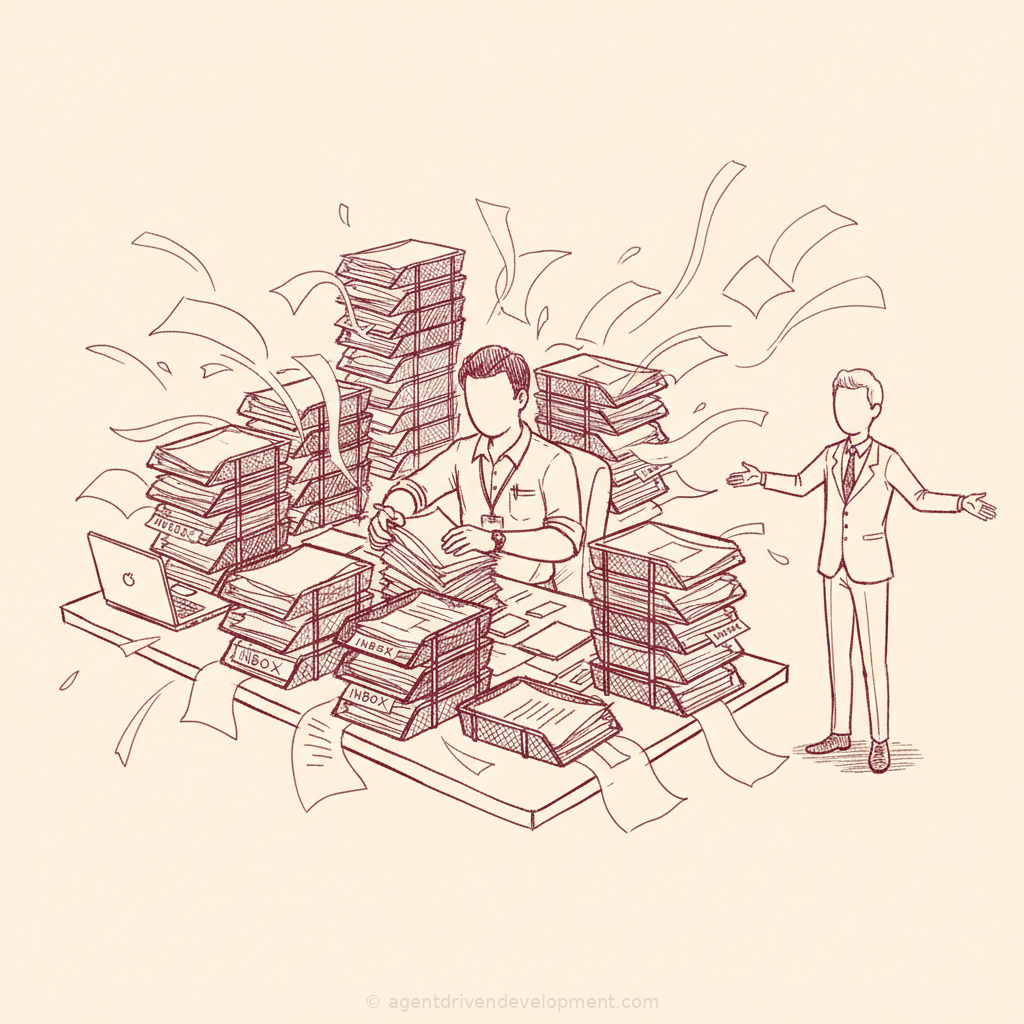
The Customer Product Operating Model
Executive Deck ↗Exec summary ↗Listen ↗Your product team spends 60% of their time on coordination that agents handle in minutes. Building is no longer the bottleneck, your customer's capacity to receive what you ship is. The operating model that wins is embarrassingly simple: talk to customers, figure out what to build, ship it, make sure it lands.
-

Everything You Learned About Building Software Is Already Wrong
Executive Deck ↗Exec summary ↗Listen ↗You read Brooks. You read Fowler. You read The Phoenix Project and highlighted the good parts. Then you built something on Claude Code this weekend and realized your entire engineering organization is obsolete. Here is what building software actually looks like in 2026.
-
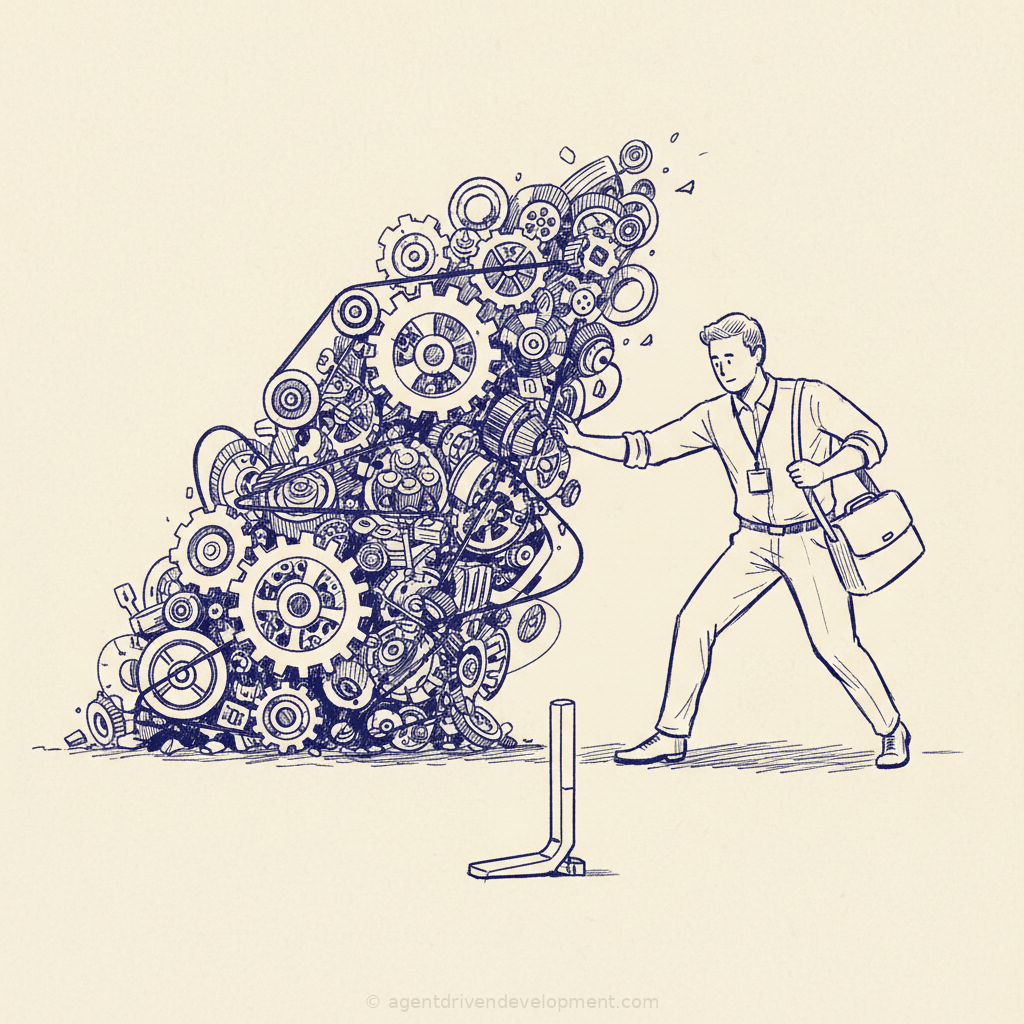
First Principles for AI-Native Engineering Execution (For CxOs)
Executive Deck ↗Exec summary ↗Listen ↗The first principles behind agent-driven development, distilled from our published body of work into a clear, executive guide for decisions, governance, talent, and operating cadence.
-
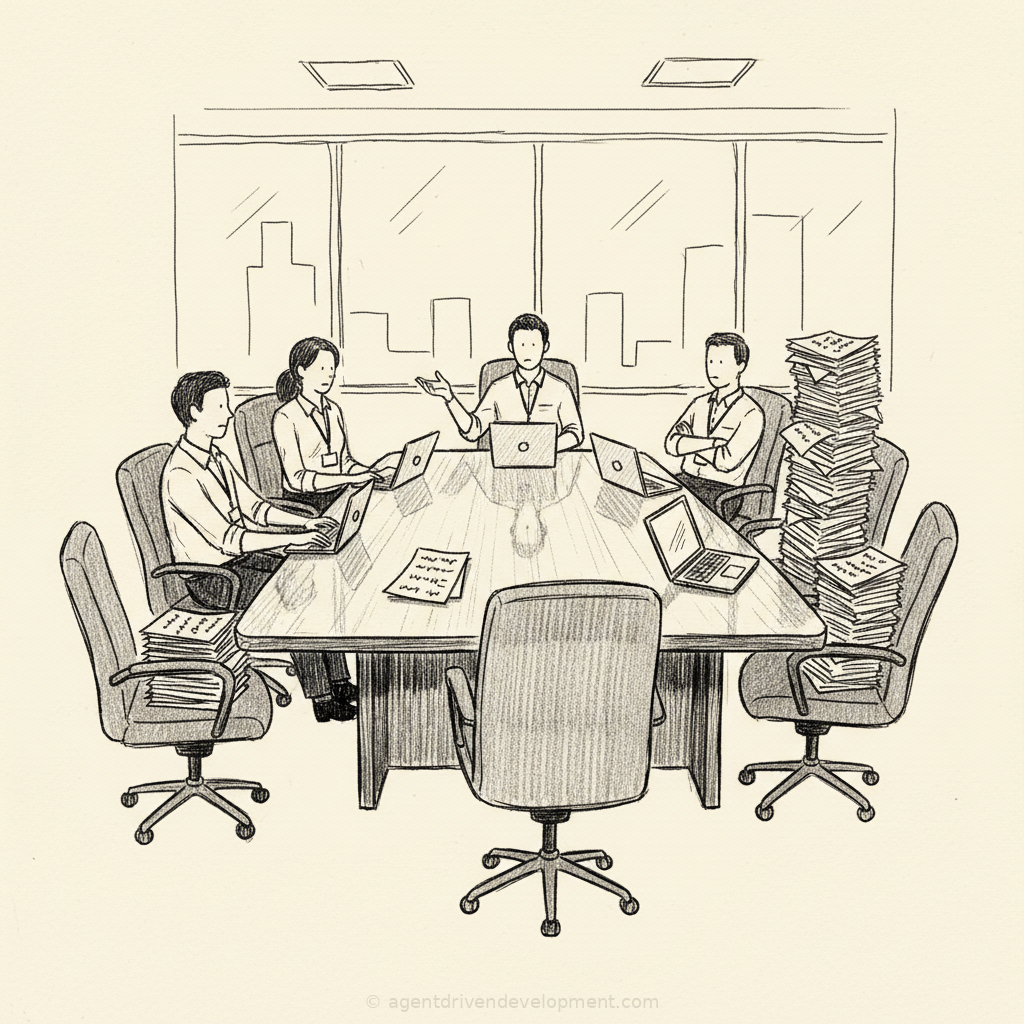
The Board Memo Version: Four Sessions, Four Decisions, One Operating Plan
Executive Deck ↗Exec summary ↗Listen ↗A concise board memo for executive teams: the four-session operating model, timeline, decisions, governance, and risk controls to move from AI ambiguity to measurable execution.
-

The Executive Operating Model We Run In Private: Four Sessions That Turn AI Anxiety Into Board-Grade Decisions
Executive Deck ↗Exec summary ↗Listen ↗A detailed, private four-session executive operating model with agendas, timelines, decisions, and risk controls to move from AI confusion to measurable execution.
-
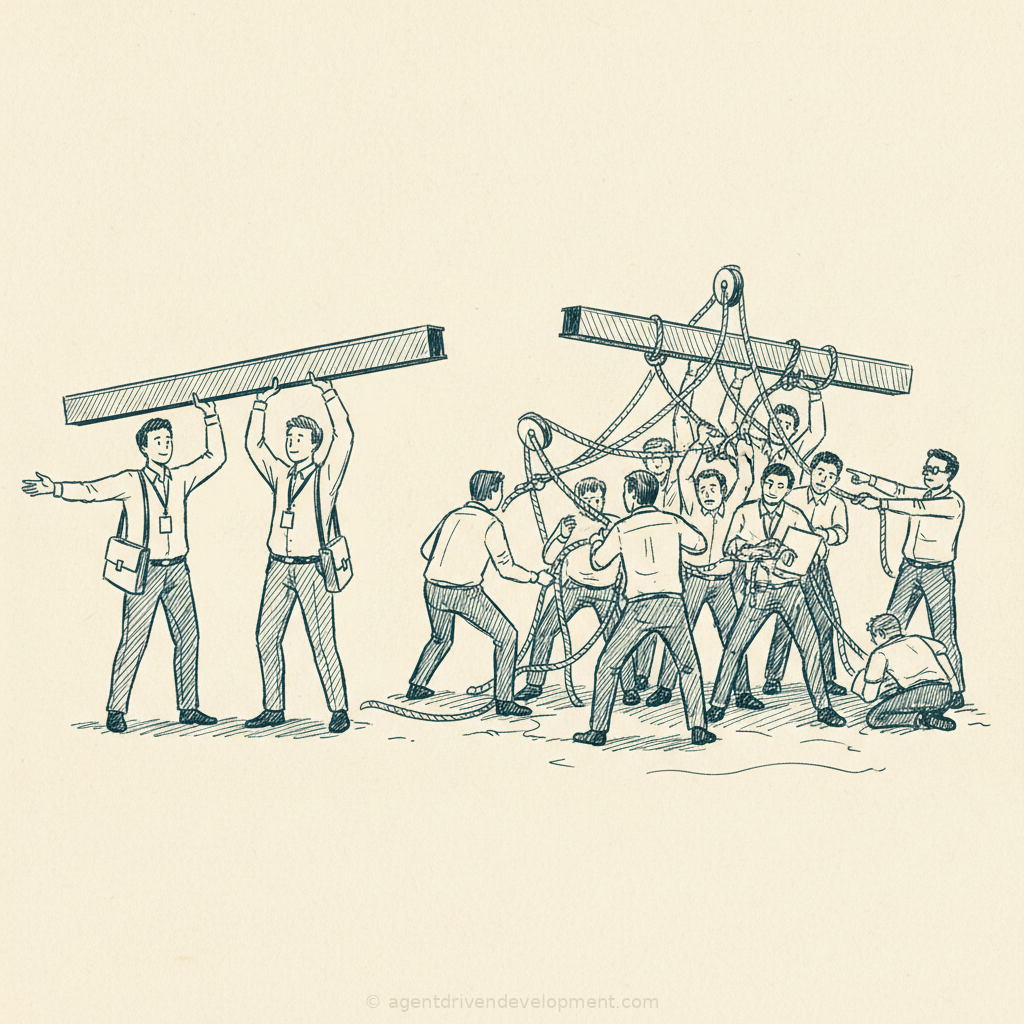
Two Engineers. One Year. More Output Than Ten.
Executive Deck ↗Exec summary ↗Listen ↗Nathan joined a scale-up as CTO with a mandate to hire ten engineers. He hired zero. Twelve months later, he and one existing associate engineer had decomposed the monolith, automated deployments, and outshipped the original plan.
-
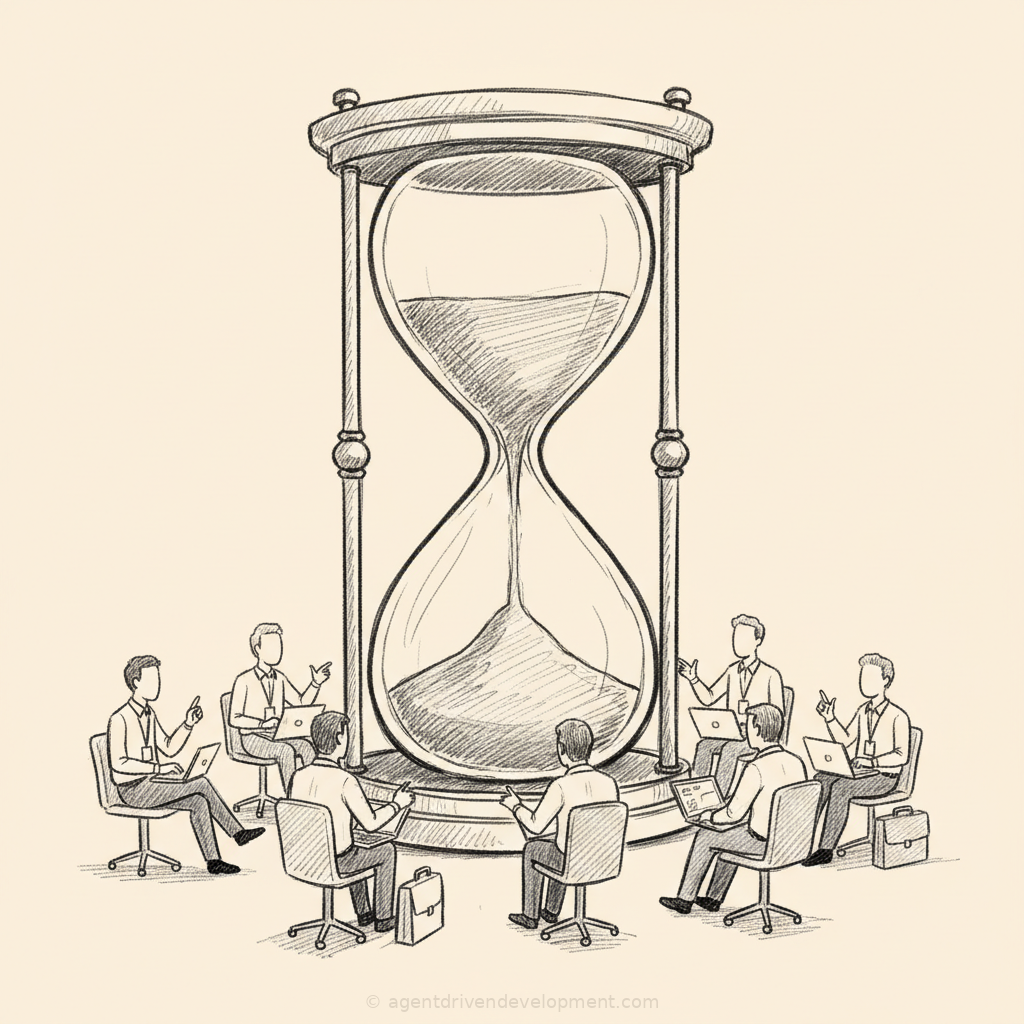
The 2028 Problem You’re Creating in 2025
Executive Deck ↗Exec summary ↗Listen ↗Your 2025 AI decisions shape your 2028 reality. Learn why waiting for clarity is the riskiest strategy and how to build for capabilities that don’t exist yet.

Corporate fiction


Three books. One operating problem. No clean hero.
Read 2028, Meridian, and AgentDrivenDevelopment.com’s Survive free online.
Read free online →