3 min read
Every week I get the same question from executives: “What are the use cases for AI agents in development?”
It’s the wrong question. And asking it reveals you haven’t touched the thing yet.
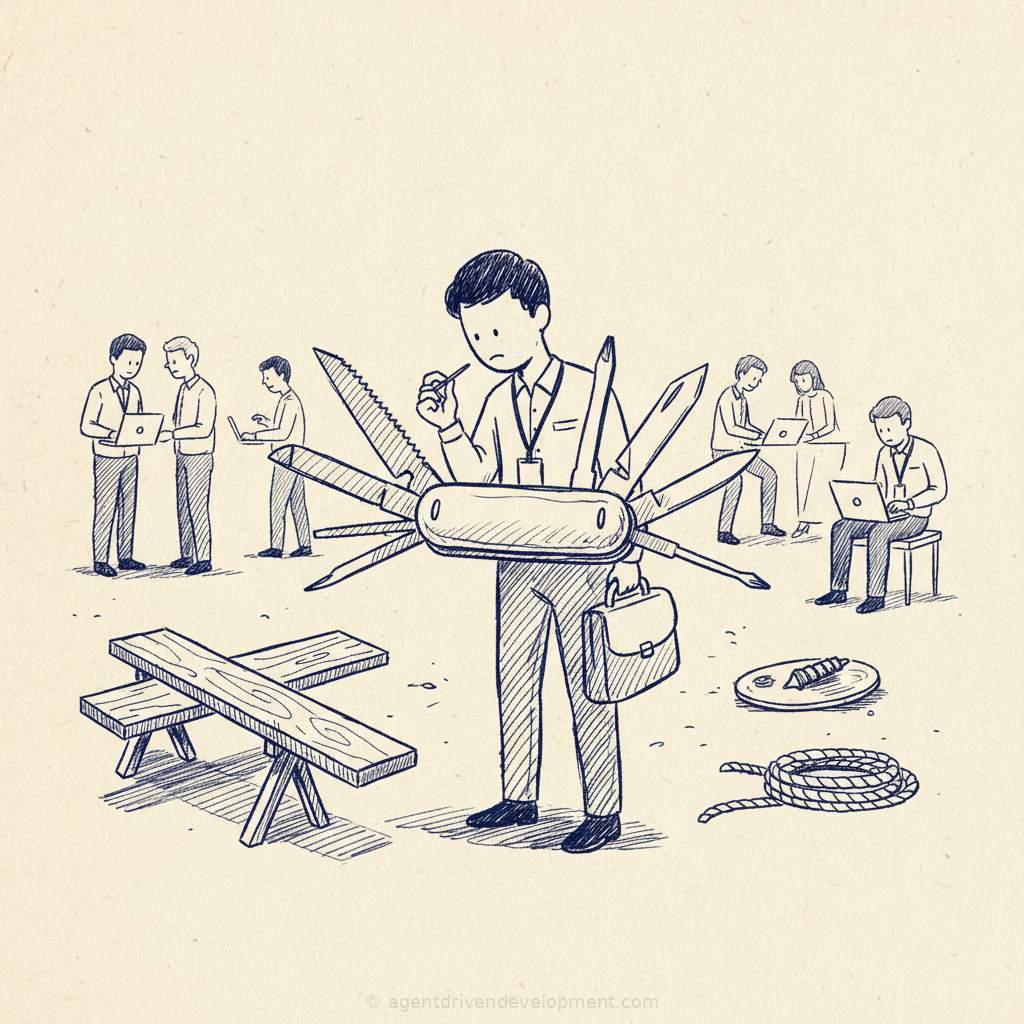
The Use Case Is Your Entire SDLC
There’s no clever list of scenarios where agents apply. No decision matrix. No roadmap that will survive contact with reality.
The use case is building software. All of it. Every aspect of your SDLC. Writing code. Reviewing code. Debugging. Testing. Refactoring. Documenting. Migrating. Requirements. Design. Deployment. All of it.
If you’re still asking about use cases, you’re trying to understand a paradigm shift through the lens of the old paradigm. You’re asking “what can I automate?” when the question is “how do I work differently?”
There’s No Framework to Buy
I need to be direct about something: there is no SAFe for agentic development. No Scrum certification. No transformation theater you can purchase from a consultancy that will make this make sense.
The frameworks haven’t been written yet because we’re still figuring out what works. The people who will write them are building things right now, not waiting for someone else to package the answers.
If your instinct is to wait for the methodology, you’re going to wait too long.
You Have to Build
Here’s the uncomfortable truth: you cannot understand agentic development by reading about it. You cannot delegate this understanding. You cannot hire a consultant to explain it.
You have to build something.
Not watch a demo. Not review someone else’s proof of concept. Build.
Because agents don’t work the way you think they work. They don’t work the way the marketing materials suggest. They work in ways you can only understand through direct experience.
The executives who will lead successful transformations are building things right now. Nights. Weekends. Side projects. Anything.
The executives who will struggle are waiting for someone to hand them a framework.
The Paradigm Problem
When the paradigm shifts, expertise in the old paradigm becomes a liability.
You’ve spent twenty years developing intuition about building software. How long things take. What’s hard. Where the risks hide. That intuition is now increasingly wrong.
You can’t update it by reading. You update it by doing.
Every CTO I know who truly gets this has the same story: they built something themselves. They fought with the tools. They developed new intuition through direct contact with the new reality.
The ones still asking about use cases are operating on old intuition. That gap widens every month.
What Building Teaches You
When you build with agents, you learn things no article can teach:
Context is everything. The same agent with different context produces wildly different results. Until you’ve felt it, you don’t understand it.
The work changes shape. You stop writing code and start curating knowledge. You stop debugging syntax and start debugging specifications.
Your measurement systems are wrong. Everything you’re measuring was designed for a world where human cognition was the bottleneck. That’s no longer the world you’re in.
The Competitive Window
There’s a window right now. Maybe eighteen months. Maybe less.
Inside this window, executives who develop hands-on understanding will pull ahead. They’ll make better decisions. They’ll know which vendor claims are plausible and which are fantasy.
Outside this window, the gap becomes permanent. You’ll be managing something you don’t understand.
Start Tonight
Pick something small. A tool you wish existed. An automation that would make your life easier.
Open the IDE. Start building.
You’ll be frustrated. You’ll be confused. Good. That’s the learning happening.
The executives who will lead the next decade of software development aren’t waiting for permission. They aren’t waiting for the perfect use case. They aren’t waiting for the framework.
They’re building. Tonight.
Are you?


