Skip to content
, , ,

You Added AI Agents. Why Are You Still Running a Separate Quality Organization Like It Is 2009?

If you are adopting AI and still defending a separate quality organization in 2026, you are not making a technical argument. You are making an emotional one. CEOs and boards should treat that as a leadership warning.

·

Executive DeckListen

Let your agent read this

Executive briefClick to expand

Operating models must evolve to align with new capabilities, especially in an agent-driven development environment.

Modernize the Quality Operating Model

  • Quality shifts from a downstream gate to an inherent property of the development system itself. This requires embedding quality expertise within engineering teams rather than maintaining it as a separate organizational unit.
  • Agents require immediate feedback loops to learn and iterate effectively. Inter-departmental handoffs for quality assurance introduce latency, undermining the core advantage of agentic workflows.
  • Confidence in software quality now derives from continuous instrumentation, automated validation, and system-generated proofs, replacing reliance on manual inspection and ceremonial sign-offs.
  • The return on investment for separate quality organizations diminishes as automated testing, observability, and embedded quality practices become integral to the engineering process.

The first question for any AI program: does the organizational structure support rapid feedback and continuous validation, or does it enforce antiquated gates?

Read the full executive package →

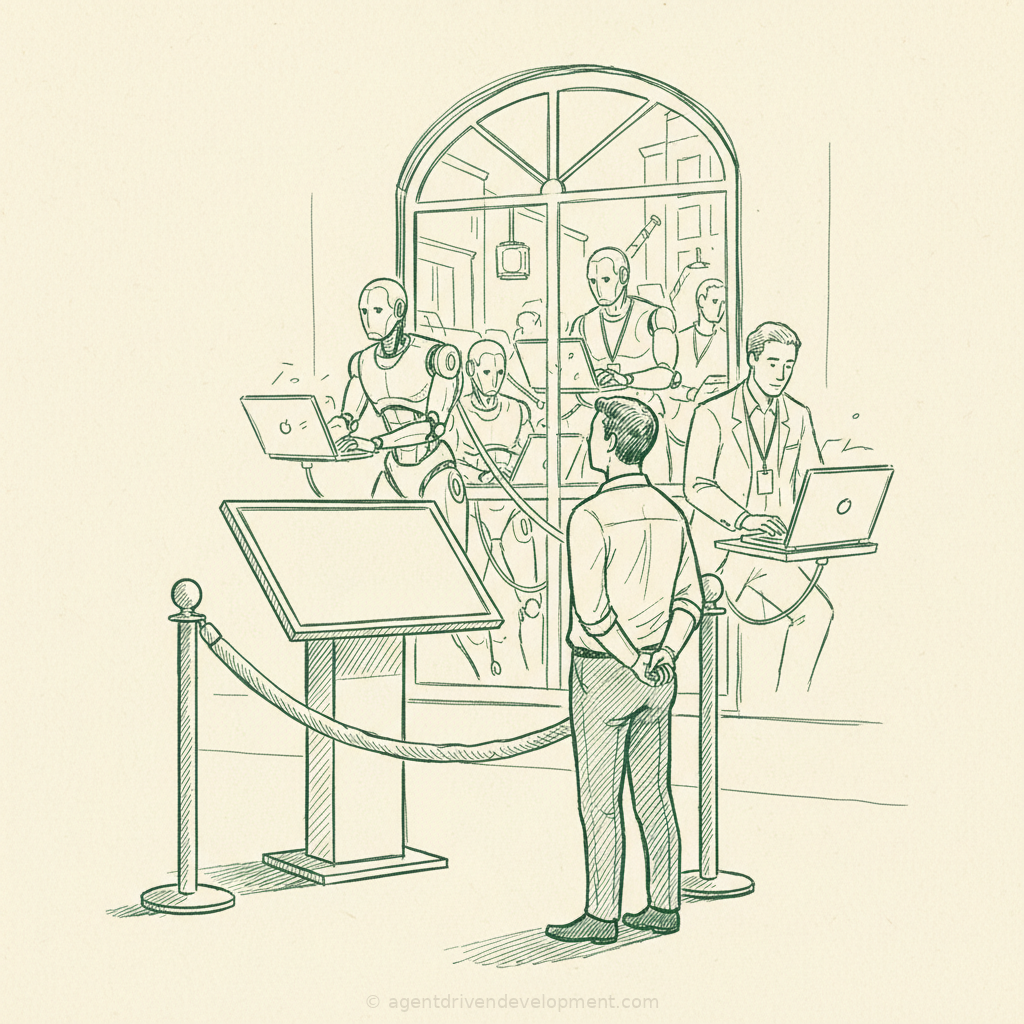
Pen doodle illustration for if-you-still-run-a-separate-quality-organization-in-2026

10 min read

Operating models must evolve to align with new capabilities, especially in an agent-driven development environment.

Modernize the Quality Operating Model

  • Quality shifts from a downstream gate to an inherent property of the development system itself. This requires embedding quality expertise within engineering teams rather than maintaining it as a separate organizational unit.
  • Agents require immediate feedback loops to learn and iterate effectively. Inter-departmental handoffs for quality assurance introduce latency, undermining the core advantage of agentic workflows.
  • Confidence in software quality now derives from continuous instrumentation, automated validation, and system-generated proofs, replacing reliance on manual inspection and ceremonial sign-offs.
  • The return on investment for separate quality organizations diminishes as automated testing, observability, and embedded quality practices become integral to the engineering process.

The first question for any AI program: does the organizational structure support rapid feedback and continuous validation, or does it enforce antiquated gates?

Companion

Most readers also read: The Engineers Who Can’t Use AI Agents Don’t Have a Tools Problem

Written by

The views and opinions expressed in this article are the author’s own and do not represent the positions of any employer, client, or affiliated organization.

Every article, narrated. Listen while you ship.
From the Author

Corporate fiction

Three books. One operating problem. No clean hero.

Read 2028, Meridian, and AgentDrivenDevelopment.com’s Survive free online.

Read free online →

Listen

13 min listenDownload

One useful note a week

Get one good email a week.

Short notes on AI-native software leadership. No launch sequence. No funnel theater.