If Mythos Is Real, Will the Board Wait 24 Months While You Figure It Out?
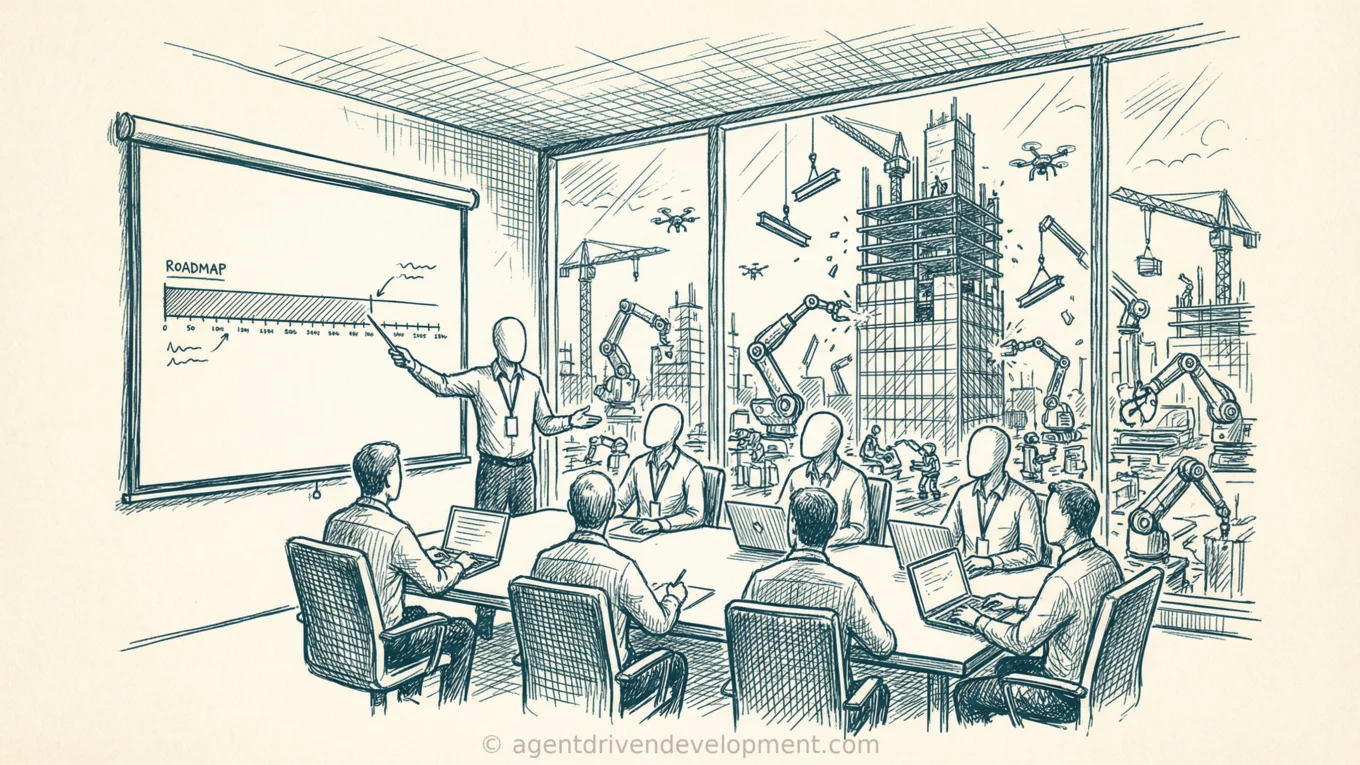
Everyone is talking about Claude and Mythos. Nobody is talking about the fact that your org still cannot ship. The models are not your bottleneck. Your decade-old dysfunction is. And the board is about to notice.
Capability is the only durable AI moat. Tooling is rented; capability compounds.
Prioritize organizational friction as the new constraint on AI adoption.
The rate of change in AI capability is exponential, collapsing the window for organizational adaptation. Organizations must internalize this non-linear improvement curve.
As technical friction diminishes with advanced tooling, the enduring organizational friction within the SDLC becomes the primary bottleneck to value delivery. This friction manifests as process debt.
Process debt, such as manual approvals, inadequate test automation, and fragmented coordination, incurs significant, measurable cost in engineering effort and delayed time to market.
Under-investment in foundational engineering practices, like robust testing and streamlined deployment, creates a capability gap that advanced AI tools cannot bridge.
The ability to rapidly adopt and deploy new AI capabilities becomes a core competency, not an optional experiment. Organizations must build the internal capacity to integrate innovation continuously.
The first question for any AI program: what long-standing organizational impediments will this accelerate, and which will it expose?
Capability is the only durable AI moat. Tooling is rented; capability compounds.
Prioritize organizational friction as the new constraint on AI adoption.
The rate of change in AI capability is exponential, collapsing the window for organizational adaptation. Organizations must internalize this non-linear improvement curve.
As technical friction diminishes with advanced tooling, the enduring organizational friction within the SDLC becomes the primary bottleneck to value delivery. This friction manifests as process debt.
Process debt, such as manual approvals, inadequate test automation, and fragmented coordination, incurs significant, measurable cost in engineering effort and delayed time to market.
Under-investment in foundational engineering practices, like robust testing and streamlined deployment, creates a capability gap that advanced AI tools cannot bridge.
The ability to rapidly adopt and deploy new AI capabilities becomes a core competency, not an optional experiment. Organizations must build the internal capacity to integrate innovation continuously.
The first question for any AI program: what long-standing organizational impediments will this accelerate, and which will it expose?
After 20 years in software development, Norman is both a hands-on leader and defining the new age of AI SDLC for some of the biggest brands in the world — and exploring it with the builders. He writes here about things he is hearing and seeing. All posts are his personal points of view and do not reflect any employer or any customer he has ever had contact with.
The views and opinions expressed in this article are the author’s own and do not represent the positions of any employer, client, or affiliated organization.