How to Build an AI-Native Engineering Team (Not an AI-Assisted One)
Most teams added AI tools and called it transformation. An AI-native engineering team requires two things most organizations are not willing to change: the staffing model and the governance model. Here is what both look like.
Organizational design for AI adoption demands a re-evaluation of both staffing and governance models.
Redesign for AI-Native Engineering
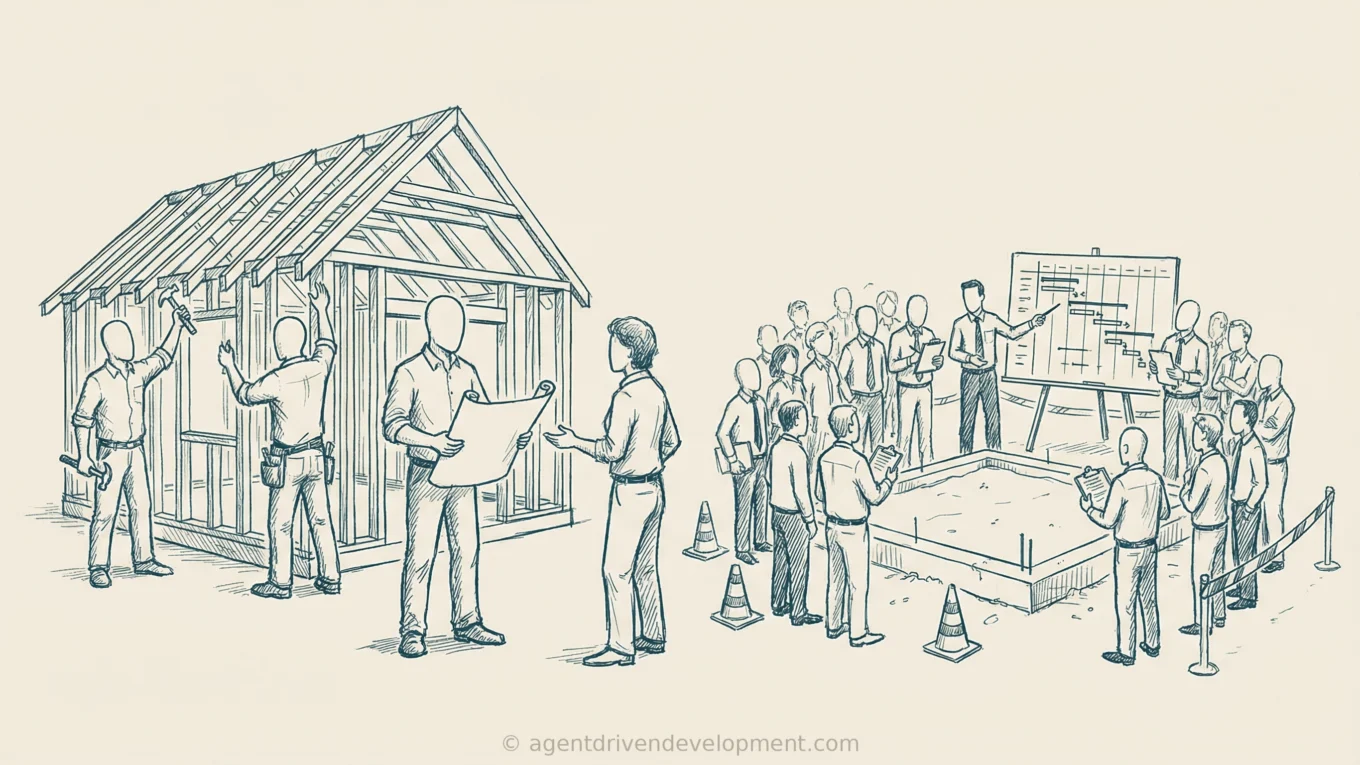
An AI-native staffing model emphasizes a small team of highly skilled principals capable of end-to-end ownership, reducing orchestration overhead associated with larger teams.
An AI-native governance model treats code as cheap to produce and expensive to review, inverting the assumptions of pre-AI frameworks.
Principals in an AI-native organization are defined by their capacity for system design, context architecture, precise specification, rapid judgment, and a proactive governance instinct.
Transitioning to an AI-native model involves an initial investment in parallel operations and potential restructuring costs, justified by accelerated throughput and reduced long-term operational expenses.
The most critical questions for an AI-native organization concern the adaptability of its talent and its governance to new production economics.
Organizational design for AI adoption demands a re-evaluation of both staffing and governance models.
Redesign for AI-Native Engineering
An AI-native staffing model emphasizes a small team of highly skilled principals capable of end-to-end ownership, reducing orchestration overhead associated with larger teams.
An AI-native governance model treats code as cheap to produce and expensive to review, inverting the assumptions of pre-AI frameworks.
Principals in an AI-native organization are defined by their capacity for system design, context architecture, precise specification, rapid judgment, and a proactive governance instinct.
Transitioning to an AI-native model involves an initial investment in parallel operations and potential restructuring costs, justified by accelerated throughput and reduced long-term operational expenses.
The most critical questions for an AI-native organization concern the adaptability of its talent and its governance to new production economics.
After 20 years in software development, Norman is both a hands-on leader and defining the new age of AI SDLC for some of the biggest brands in the world — and exploring it with the builders. He writes here about things he is hearing and seeing. All posts are his personal points of view and do not reflect any employer or any customer he has ever had contact with.
The views and opinions expressed in this article are the author’s own and do not represent the positions of any employer, client, or affiliated organization.