Skip to content
, ,

You Are About to Hire a VP of AI Capability. Do Not.

You diagnosed the CoE pattern. Now you are about to repeat it by hiring a VP of AI Capability. Here is why forcing your organization to build the competency itself is the only path that works, why it will be…

·

Executive DeckListen

Let your agent read this

Executive briefClick to expand

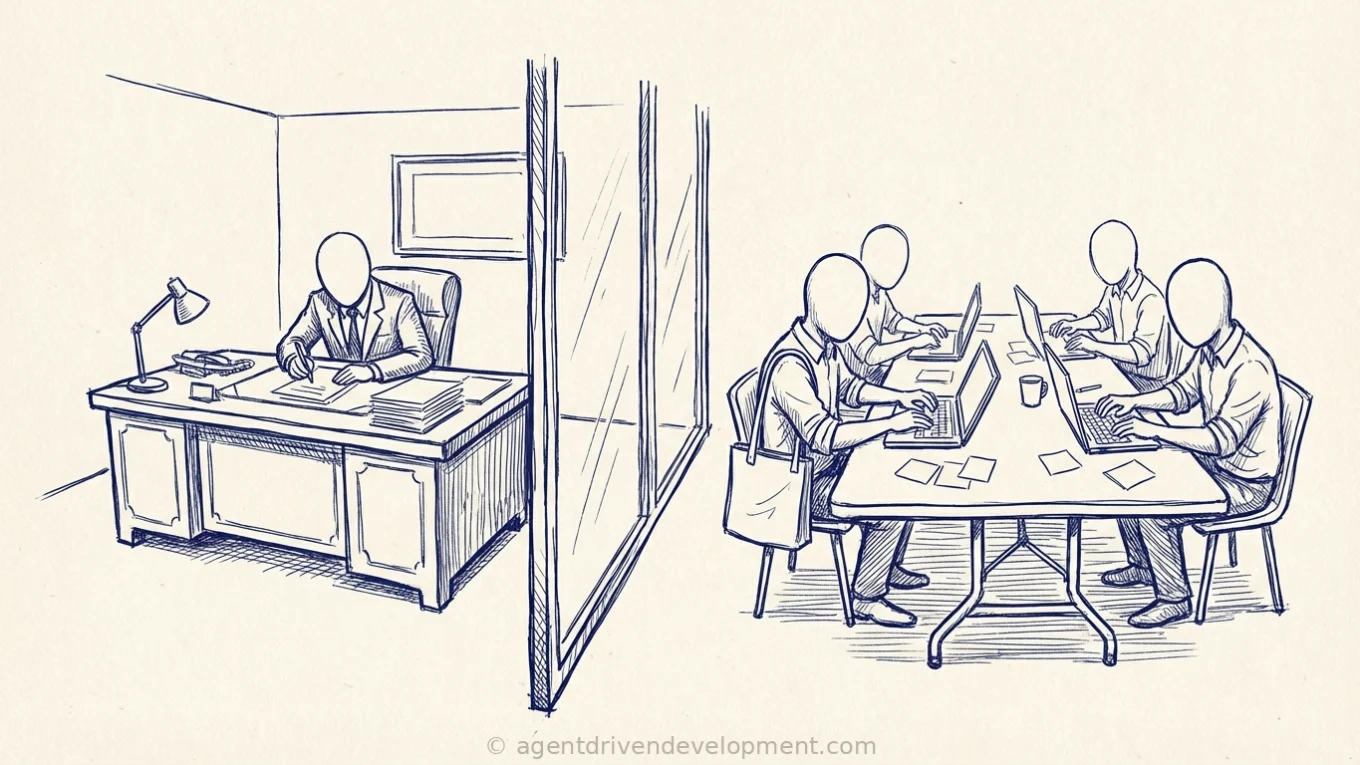
Building AI capability is an organizational, not an individual, challenge. The instinct to centralize this competency replicates past failures by insulating the core business from necessary adaptation.

AI Capability Resides in Practice, Not Position

  • AI capability is fundamentally a distributed competency, not a centralized function; it grows within teams where domain expertise meets automation.
  • Organizations cannot delegate the development of core operational capabilities; outsourcing the work provides artifacts, not competence.
  • The true end-state of AI adoption is not a new department, but an operating model where every team integrates AI agents into its daily workflow.
  • Effective AI adoption requires leaders to experience the technology through direct application, informing strategic decisions with practical understanding.
  • Building AI capability is a process of active re-skilling and un-learning, demanding protected time and a focus on demonstrable output over passive training.

The first question for any AI program: who is building, and what are they building into?

Read the full executive package →

15 min read

Building AI capability is an organizational, not an individual, challenge. The instinct to centralize this competency replicates past failures by insulating the core business from necessary adaptation.

AI Capability Resides in Practice, Not Position

  • AI capability is fundamentally a distributed competency, not a centralized function; it grows within teams where domain expertise meets automation.
  • Organizations cannot delegate the development of core operational capabilities; outsourcing the work provides artifacts, not competence.
  • The true end-state of AI adoption is not a new department, but an operating model where every team integrates AI agents into its daily workflow.
  • Effective AI adoption requires leaders to experience the technology through direct application, informing strategic decisions with practical understanding.
  • Building AI capability is a process of active re-skilling and un-learning, demanding protected time and a focus on demonstrable output over passive training.

The first question for any AI program: who is building, and what are they building into?

Companion

Most readers also read: The Engineers Who Can’t Use AI Agents Don’t Have a Tools Problem

Written by

The views and opinions expressed in this article are the author’s own and do not represent the positions of any employer, client, or affiliated organization.

Every article, narrated. Listen while you ship.
From the Author

Essential or Ornamental

Three companies. Three choices. One satisfactory ending.

One does nothing. One maps the waste. One bets everything on twelve people in a warehouse.

Read free online →

Listen

19 min listenDownload

One useful note a week

Get one good email a week.

Short notes on AI-native software leadership. No launch sequence. No funnel theater.