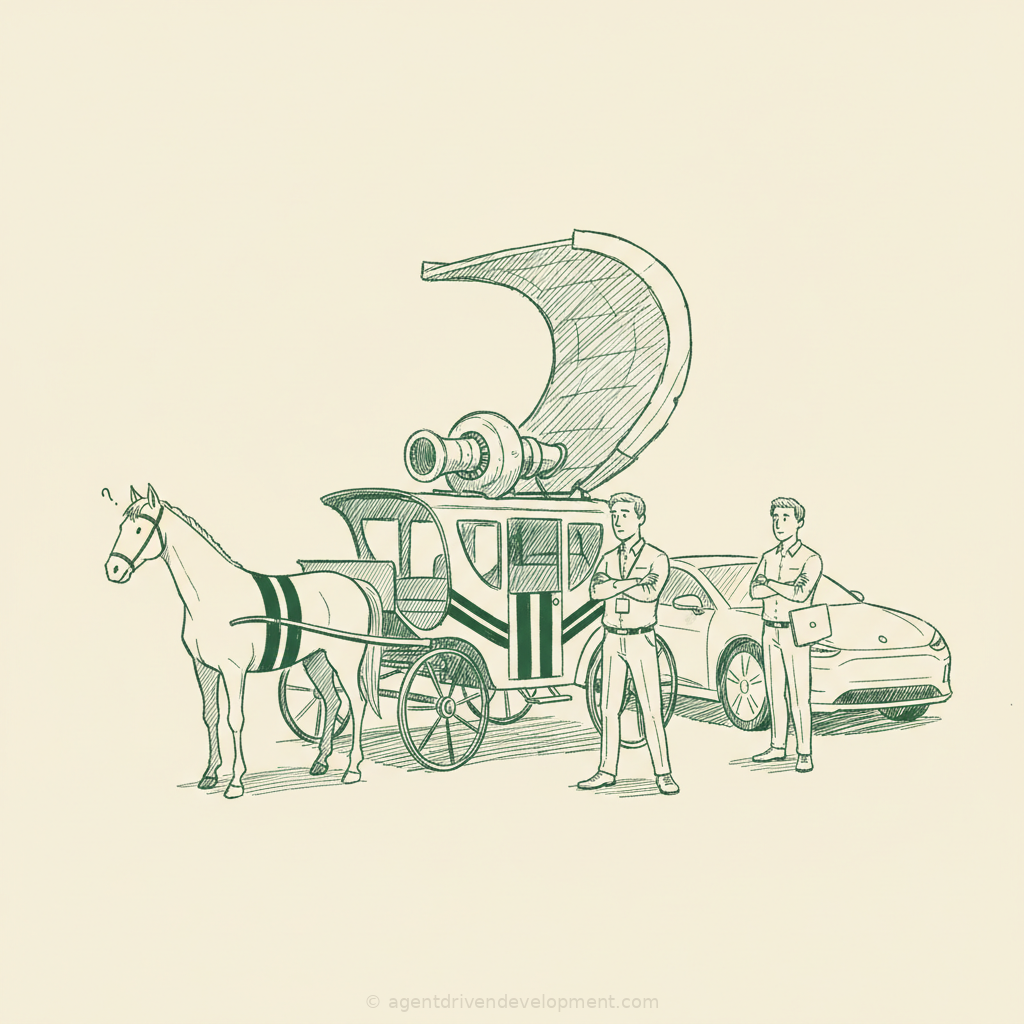
AI Will Not Save Your Monolith. These Three Things Might.
Every executive wants AI to magically modernize their 10 million line monolith. It won’t. Here’s what you actually need, and why you’ve been asking the wrong question for the last two years.
Capability is the only durable AI moat. Tooling is rented; capability compounds.
Prioritize organizational learning over technology acquisition.
An organization's capacity for modernization derives from its ability to interpret product signals, observe system behavior, and cultivate specific engineering expertise. These are human, not technological, assets.
Product value is extrinsic to code; it resides in customer relationships and market insights. Modernization therefore requires a deep understanding of customer intent and usage patterns.
Observability of existing systems is a prerequisite for effective change. Data on live system usage identifies active value streams and dormant code, informing decisions to prune or invest.
Engineering capacity for modernization requires complementary skill sets: deep knowledge of legacy systems paired with expertise in modern architectural patterns and practices.
The default response to capability gaps should be an economic build-versus-buy analysis, focusing on the density of judgment required, not merely the volume of resources.
The first question for any AI program: what does this organization measure, and what does the measurement reward?
Capability is the only durable AI moat. Tooling is rented; capability compounds.
Prioritize organizational learning over technology acquisition.
An organization's capacity for modernization derives from its ability to interpret product signals, observe system behavior, and cultivate specific engineering expertise. These are human, not technological, assets.
Product value is extrinsic to code; it resides in customer relationships and market insights. Modernization therefore requires a deep understanding of customer intent and usage patterns.
Observability of existing systems is a prerequisite for effective change. Data on live system usage identifies active value streams and dormant code, informing decisions to prune or invest.
Engineering capacity for modernization requires complementary skill sets: deep knowledge of legacy systems paired with expertise in modern architectural patterns and practices.
The default response to capability gaps should be an economic build-versus-buy analysis, focusing on the density of judgment required, not merely the volume of resources.
The first question for any AI program: what does this organization measure, and what does the measurement reward?
After 20 years in software development, Norman is both a hands-on leader and defining the new age of AI SDLC for some of the biggest brands in the world — and exploring it with the builders. He writes here about things he is hearing and seeing. All posts are his personal points of view and do not reflect any employer or any customer he has ever had contact with.
The views and opinions expressed in this article are the author’s own and do not represent the positions of any employer, client, or affiliated organization.